Sponsored content, produced in partnership with Visit Napa Valley and Wine Spectator.
Where to Stay in Napa Valley: From Napa to Calistoga
Many travelers try to pack Napa Valley into a weekend. Instead, divide your stay between two locations and let the valley come to you.
Sponsored Content · Presented by Visit Napa Valley
Carneros Resort and Spa, Napa
The fog that sometimes drifts through the southern end of the valley may be Napa's most overlooked spectacle. It comes up off the San Pablo Bay before sunrise. Thick, damp, weirdly quiet. Sits on the vineyards like it has nowhere else to be. By mid-morning it lifts and the light goes gold and sharp, the kind of light that makes people put their phones in a drawer and forget about them for hours.
The Carneros region is the cooler, windier, more pastoral end of Napa Valley. The wines are different down there, Pinot Noir and Chardonnay instead of the big Cabernets, and the whole pace of things runs slower.
Carneros Resort and Spa feels less like a traditional resort and more like a small countryside community woven into the vineyards. Freestanding cottages, dozens of them, spread across working culinary gardens, olive groves and grapevines that are part of the Carneros American Viticultural Area (AVA). Early morning, walking through the property feels like a very exclusive farm that someone decided to put soaking tubs in. That is meant as a compliment.
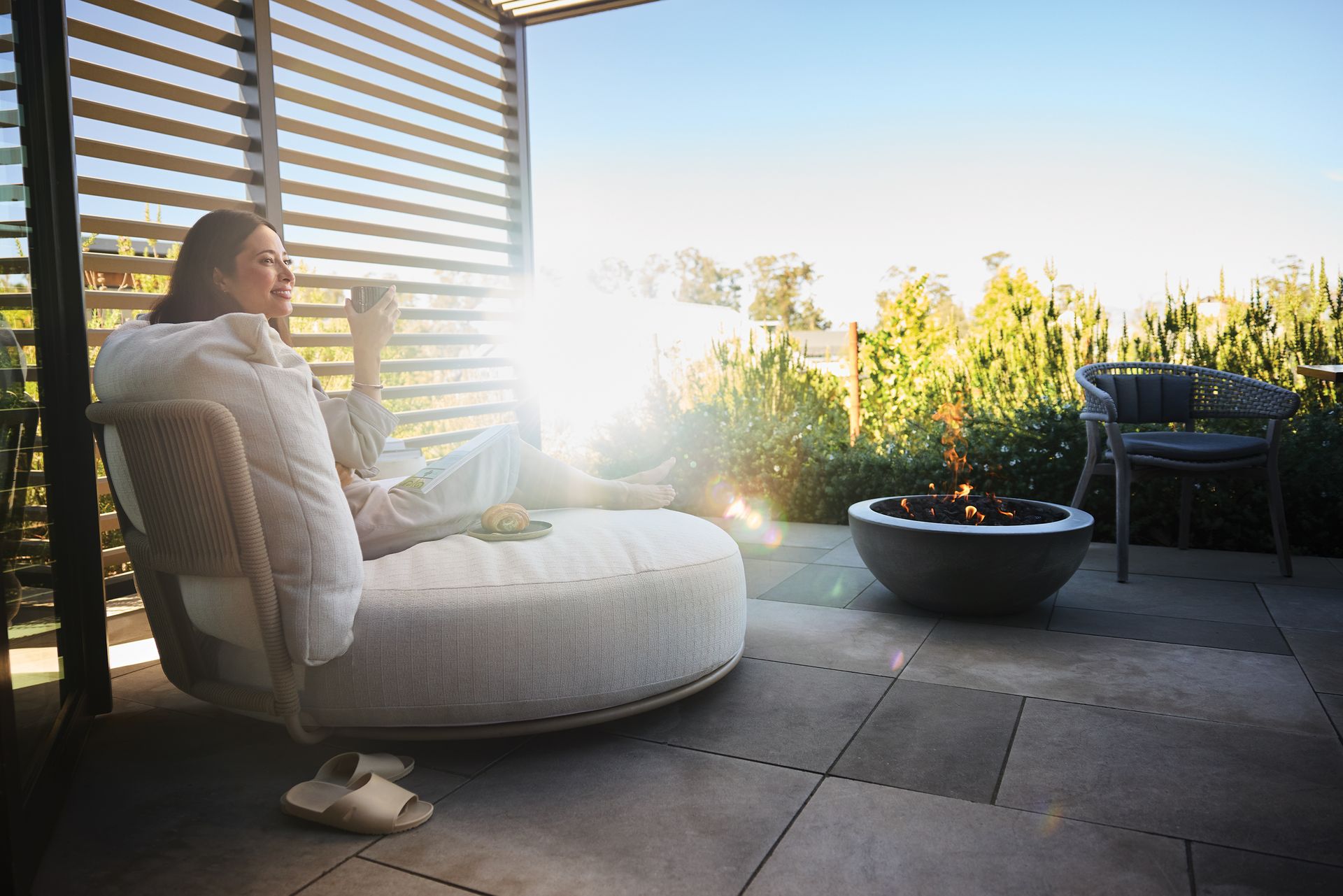
The Signature Cottages are where most guests stay. Wood-burning fireplaces. An outdoor shower that will ruin every other shower going forward. The beds are the kind nobody can describe without sounding like an advertisement, suffice it to say eight uninterrupted hours is not unusual here. The patios are private enough that an entire afternoon can pass with a book and not another guest in sight.
For those who need more space: the Wellness Suite has a private sauna and a recovery-oriented design. The Carneros Residence is a full multi-bedroom house with its own hot tub and kitchen, blurring the line between luxury hotel accommodations and a private vacation home.
The luxury here is quiet in a way that sneaks up on people. No marble lobbies. No chandeliers. Just an outdoor shower that works perfectly, a cottage door that creaks when it opens at dawn, and fog on the vines.
A routine forms without anyone planning it. Coffee on the porch. A wander through the FARM culinary gardens, which are real gardens, not a set piece: staff can be spotted actually harvesting chard most mornings. A ten-minute drive to Domaine Carneros for a mid-day sparkling wine. That estate, founded by Taittinger, looks like a château that got lost on its way to Champagne and ended up on a California hillside. The terrace alone justifies the detour.
Lunch back at FARM restaurant. The vegetables come from the on-property gardens, and the kitchen treats them with the kind of care that reminds you what farm-to-table really means: produce picked at its peak, handled simply, and served with a clear sense of place.
Late afternoon the resort's Town Square gets going. Wine tastings. Honey tastings. Sometimes live music. The particular satisfaction of watching someone at the next table realize they haven't looked at their phone since breakfast. The hillside pool has a view over the vines that, after a glass of the local Pinot Noir, has been known to rearrange priorities.
For wine enthusiasts: the Carneros AVA is often overlooked in a region synonymous with Cabernet Sauvignon. Yet producers including Etude, Bouchaine, Saintsbury, and Domaine Carneros consistently turn out some of Napa Valley's most compelling Pinot Noir and Chardonnay, highlighting the diversity of styles the valley can achieve. The wines here tend toward freshness, structure, and nuance, offering a different expression of Napa than many visitors expect. Carneros Resort and Spa sits at the heart of it all, making it an ideal base for exploring the appellation.
Also worth noting: the property genuinely welcomes dogs. If Hugo's coming, bring him.
Mount View Hotel & Spa, Calistoga
As you head north, Napa Valley becomes a little wilder and a little quieter. Mountains get taller and closer. The road shrinks. At the valley's northern end sits Calistoga, a town built on top of geothermal hot springs, surrounded by wineries, with the kind of lived-in charm that keeps people around longer than they planned.
Calistoga has retained a relaxed, unvarnished character. Not aggressively, just cheerfully, persistently. The result is a place that feels like itself instead of a version of itself designed for out-of-towners. That's the whole draw.
The Mount View has been part of Lincoln Avenue since 1919, when Italian immigrant John B. Ghisolfo opened its doors. Hotel owner, restaurateur, four-term mayor, his influence shaped Calistoga in ways that extended well beyond the property itself. Locals called him Mr. Calistoga, and more than a century later, the hotel remains woven into the fabric of the town he helped build.
That sense of continuity is part of the appeal. When Michael and Stephanie Woods took stewardship of the property, they chose preservation over reinvention, retaining its Art Deco character, restoring access to its geothermal mineral waters and allowing the building's historic bones to shine. Added to the National Register of Historic Places in 1981, the Mount View feels neither frozen in time nor overly polished. Like Calistoga itself, it remains comfortably rooted in its past while embracing the present, a philosophy evident throughout the property, from its thoughtfully updated guest rooms to the relaxed hospitality of Robert's Tropical Table.
It's a hotel that knows what it is. That's rarer than it should be.
Thirty-three rooms. They're comfortable in the way that actually matters, sized for real people, decorated with Art Deco details in the tile and the furniture that give the building a personality guests can feel. A century of standing has left its mark, and nobody's pretending otherwise.
Every morning: coffeehouse-style breakfast at the door. For plenty of travelers, that and a comfortable bed is all a hotel needs to get right.
The water rises from the volcanic earth underfoot. It doesn't feel like any hotel hot tub. It feels prehistoric. It is.
The geothermal springs hot tub is the real center of the property. Calistoga sits on underground springs that have drawn visitors since the 1800s, and the Mount View taps straight into the source. Guests are sitting in water heated by the volcanic activity underneath them. It hits different from a regular hot tub. The body knows the difference even if the brain can't explain why.
True Spa is run by two independent therapists who partner with the hotel and customize the program. The Calistoga mud wraps use volcanic ash mixed the traditional way. There's a Himalayan salt sauna. A heated pool with enough lounge space to claim a cabana and not move until dinner. Overnight guests are offered ten percent off all spa services.
Calistoga is best approached without an agenda. Lincoln Avenue gathers the essentials: thoughtful, ingredient-driven restaurants, a scattering of independent shops, and tasting rooms for producers from the valley's northern edge. The wines reflect their setting: Cabernet Sauvignon and Zinfandel shaped by Calistoga's warmer, drier climate, offering a riper, more muscular counterpoint to the bottlings poured in Carneros to the south. It's reason enough to see both ends of Napa Valley in a single trip.
Evening settles in easily here. Return to the Mount View, where time seems to move at its own pace, then head to Eight North, one of Calistoga's most compelling tables. Back at the hotel, the mineral pools await. Calistoga's oldest indulgence still delivers exactly what visitors have sought for generations. Some places evolve; others understand the value of holding steady. This is one of them.
This article was created in partnership with Visit Napa Valley. For trip planning resources, winery maps, dining guides, and seasonal events, visit visitnapavalley.com.